
Marmaris: Things to Do in Marmaris The Complete Travel Guide
Things to do in Marmaris, Turkey: best beaches, boat trips, food, and the best time to visit this Turquoise Coast resort town.
Marmaris Holidays
Introduction to Marmaris Holidays
Marmaris sits where the Aegean quietly meets the Mediterranean, tucked into a bay ringed by pine-covered hills on Turkey's southwestern coast. If you're looking into things to do in Marmaris for the first time, the honest answer is: more than the "big beach resort" label suggests. Yes, there's a long sandy waterfront and a nightlife strip that gets loud in July. But there's also a 16th-century castle, a working marina where wooden gulets set sail every morning, and day trips to turtle beaches and ancient ruins that most package-holiday guests never bother with. This guide is built for travelers who've been somewhere before and know how to spot filler — so it skips the vague superlatives and sticks to what you'll actually use.
Quick-Facts Snapshot
- Best time to visit: May, June, September, and early October — warm enough to swim, cool enough to sightsee comfortably
- Ideal trip length: 4–7 days (enough for beach time, a boat trip, and at least one inland day trip)
- Nearest airport: Dalaman Airport (DLM), about 95 km away — roughly 1 hour 25 minutes by taxi or private transfer, closer to 1 hour 30 to 2 hours by shuttle bus depending on stops
- Currency & daily budget: Turkish lira (TRY). Budget travelers can manage on €35–50/day; mid-range comfortably on €70–120/day; luxury stays and private boat charters push well past €200/day
- Language: Turkish. English proficiency is decent in the tourist zones (marina, Bar Street, hotels) but thinner once you're in local neighborhoods or smaller villages
- Time zone: GMT+3 (Turkey Time, no daylight saving changes)
Getting There & Getting Around
Flight times. From London, it's roughly 4 hours direct to Dalaman in summer season. From Frankfurt or other Central European hubs, expect around 3 to 3.5 hours. From Istanbul, domestic flights to Dalaman run about 1 hour 15 minutes, which is usually faster and cheaper than the 8+ hour overland route.
Airport transfers. Dalaman is the only realistic airport option, sitting about 95 km (roughly 1.5 hours) from town. A private taxi or transfer runs around €60–65 and takes 1 hour 20–30 minutes. The Muttaş shuttle bus is the budget option at roughly €5 per person, though it takes closer to 1.5–2 hours and times are built around domestic flight arrivals, so double-check the schedule if you're on an international flight. Pre-booked private transfers are worth the extra cost if you land late at night, since shuttle frequency drops off outside peak hours.
Getting around locally. Marmaris itself is walkable — the marina, Old Town, and main beach are all within a 15–20 minute stroll of each other. For İçmeler, Turunç, or other nearby bays, the dolmuş (shared minibus) network is cheap, frequent, and the way most locals get around. Taxis are metered but it's worth confirming the fare before a longer trip, and boat taxis connect the marina to beaches that roads don't easily reach. If you plan to explore Dalyan or drive into the national park at your own pace, a rental car frees you from dolmuş timetables, though parking in central Marmaris in peak summer can be tight.
Best Time to Visit
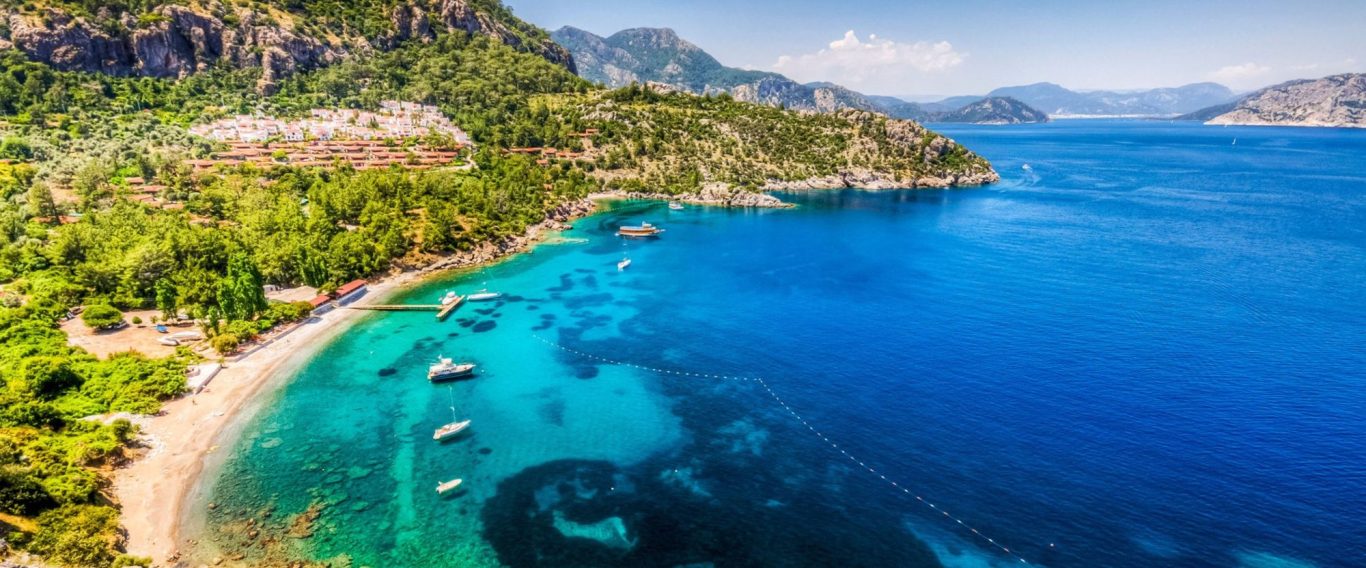
Spring (April–May): Mild days in the low-to-mid 20s°C, blooming hillsides, and noticeably thinner crowds. This is also when the Marmaris International Yacht Festival brings a burst of sailing energy to the marina.
Summer (June–August): The classic beach-holiday window, with temperatures regularly climbing past 30°C and occasionally into the high 30s or 40s during July and August heatwaves. Bar Street and the beach clubs are at full volume. Great if you want maximum sun and nightlife; less great if you'd rather explore on foot without wilting.
Autumn (September–October): Many repeat visitors consider this the sweet spot — sea temperatures stay warm, the heat backs off, and the town settles into a calmer rhythm while everything is still open.
Winter (November–March): Quiet, with daytime temperatures around 10–20°C. Many seasonal resorts and restaurants close, but it's a legitimate option if you want to see the "real" town without the holiday crowd, and hotel prices drop accordingly.
Top Places to Visit
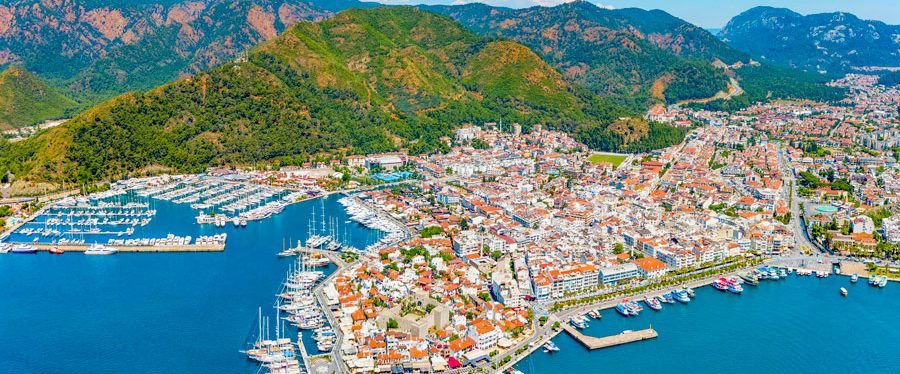
- Marmaris Castle and Archaeology Museum — A 16th-century Ottoman fortification with harbor views and a small but worthwhile collection inside. Insider tip: arrive well before closing time in the late afternoon; it shuts earlier than most tourists expect. Time needed: 45–60 minutes.
- Old Town and the Grand Bazaar — Narrow lanes packed with leather goods, spices, and souvenir stalls. Bartering is expected and starting prices are inflated on purpose. Time needed: 1–2 hours.
- Uzunyalı Beach (Long Beach) — The main promenade beach, lined with hotels and loungers. Go early morning for space on the free public stretch further from the center, since sunbeds fill up fast once cruise and hotel groups arrive. Time needed: half day.
- İçmeler — A quieter resort just under 10 minutes from central Marmaris, better suited to families or anyone wanting a calmer beach without giving up nearby restaurants and shops. Time needed: half day to full day.
- Dalyan River, Mud Baths, and İztuzu Beach — A day trip combining Lycian rock tombs cut into cliffside, therapeutic mud baths, and a beach that's a nesting ground for loggerhead turtles, with restricted access during nesting season. Insider tip: book the boat-based tour rather than driving, since river access and the rock tombs are best seen from the water. Time needed: full day.
- Marmaris National Park — Pine forest trails and a private beach a short ride from the city center, best explored by bike or rented scooter rather than the more limited public transport option. Time needed: 2–4 hours.
- The Marina and Kordon Promenade — Where wooden gulets moor before setting off on Blue Cruises. Walk it at sunset rather than midday, when the light and the temperature both cooperate. Time needed: 1 hour.
- Bar Street — Marmaris's nightlife core, dense with clubs and bars. Worth a visit even if you're not planning to drink much, just to see the town's other personality after dark. Time needed: evening.
Local Customs, Etiquette & Cultural Tips
Turkish hospitality runs warm, and a friendly greeting goes a long way. A handshake is standard for a first meeting; among friends, a cheek kiss is common. Tipping isn't obligatory but is appreciated — around 10% at restaurants, and rounding up for taxis is normal. Dress is casual in resort areas, but modest clothing (shoulders and knees covered) is expected at mosques and appreciated at more traditional sites. At the dinner table, it's polite to wait for the host or eldest person to start eating, and complimenting the food is always well received. A common misstep is treating haggling in the bazaar as optional — it's expected, and paying the first price quoted is essentially leaving money on the table.
A few useful phrases:
- Merhaba (mer-ha-BAH) — Hello
- Teşekkür ederim (teh-shek-KEWR eh-deh-rim) — Thank you
- Ne kadar? (neh kah-DAR) — How much?
- Lütfen (LEWT-fen) — Please
- Güle güle (GEW-leh GEW-leh) — Goodbye (said to someone leaving)
Insider Tips
- Base yourself near the marina or Kordon promenade if you want walkability to Old Town, restaurants, and nightlife; choose İçmeler if you'd rather have a quieter beach with a short dolmuş ride into central Marmaris.
- Buy a local SIM or eSIM at the airport or a Turkcell/Vodafone shop in town — data is cheap and coverage is solid across the resort area.
- Boat trips are heavily marketed on the harbor front; asking your hotel for a recommendation usually gets you a better price than booking from a tout at the marina.
- Carry small cash for dolmuş fares and market stalls — card acceptance is inconsistent outside main hotels and restaurants.
- If you want to see Marmaris Castle or the museum, go earlier in the day; several travelers have been caught out by an earlier-than-expected closing time.
- Sunscreen and a hat aren't optional in July and August — the heat is genuinely intense by midday.
- Avoid changing money at the very first exchange booth you see near the bus station; rates improve a short walk further into town.
- If nightlife isn't your priority, choose accommodation a few streets back from Bar Street rather than directly on it.
Suggested Itinerary Snapshot
Day 1 — Arrival and Orientation Settle in, walk the Kordon promenade at sunset, dinner at a harbor-facing seafood spot.
Day 2 — Old Town and Beach Morning at Marmaris Castle and the Grand Bazaar, afternoon at Uzunyalı Beach, evening on Bar Street.
Day 3 — Dalyan Day Trip Full-day boat tour covering the rock tombs, mud baths, and İztuzu Beach.
Day 4 — İçmeler and National Park Morning hike or bike ride through Marmaris National Park, afternoon relaxing at İçmeler Beach.



Local Food & Must-Try Dishes
- Gözleme — A thin, folded flatbread stuffed with cheese, spinach, or minced meat, cooked on a griddle. Best found at small stalls in the Old Town or local markets rather than tourist-menu restaurants. Vegetarian versions are standard.
- Meze spread — Small cold and warm dishes like hummus, ezme (spicy tomato relish), and stuffed vine leaves, typically shared at the start of a meal at a traditional restaurant. Good for vegetarians, though check for dairy in some dips.
- Fresh seafood — Grilled sea bass or sea bream is the local staple, best at harbor-facing restaurants that display the day's catch rather than a laminated photo menu.
- Kebabs — Adana and şiş kebab are everywhere, but quality varies enormously between tourist-strip spots and places locals actually eat. A busy, no-frills grill house with a short menu is usually a better sign than an elaborate international one.
- Turkish ice cream (dondurma) — A stretchy, chewy variation sold with a bit of theatrical flair by street vendors, especially around the town square.
- Ayran — A salty yogurt drink that pairs well with grilled meat and helps in the heat; worth trying even if it sounds unusual.
Marmaris Turkiye — FAQ
Is Marmaris safe for solo travelers? Yes, Marmaris is generally considered one of the safer resort towns in Turkey, with an active tourist police presence. Standard precautions apply — watch for inflated taxi fares and keep an eye on your belongings in crowded areas like the bazaar.
How many days do you need in Marmaris? Four to five days covers the main beaches, Old Town, and one day trip comfortably. A full week gives you room to add Dalyan, the national park, and a slower pace without feeling rushed.
Is Marmaris expensive? It's mid-range by European standards — cheaper than Western Mediterranean resort towns but pricier than off-the-radar Turkish destinations. Budget travelers can get by on €35–50 a day; expect to pay more at marina-front restaurants and for private boat charters.
What's the closest airport to Marmaris? Dalaman Airport, about 95 km away and roughly 1.5 hours by road, whether you take a taxi, private transfer, or the local shuttle bus.
When is the best time to visit Marmaris? May, June, September, and early October offer the best balance of warm weather and manageable crowds. July and August are hottest and busiest, ideal only if beach and nightlife are your main goals.
Can you drink tap water in Marmaris? Bottled or filtered water is the safer, standard choice for visitors; tap water is generally used for washing and brushing teeth rather than drinking.
Ready to Plan Your Trip?
Marmaris rewards travelers who mix beach time with a day or two of actual exploring — the castle, the bazaar, and a boat out to Dalyan round out what could otherwise be just another sun lounger holiday. Start blocking out your dates, and build in at least one day with no fixed plan at all.