
Travel Guidance: Wildfires in France & Spain — What You Need to Know
Last updated: 27 July 2026 14.00
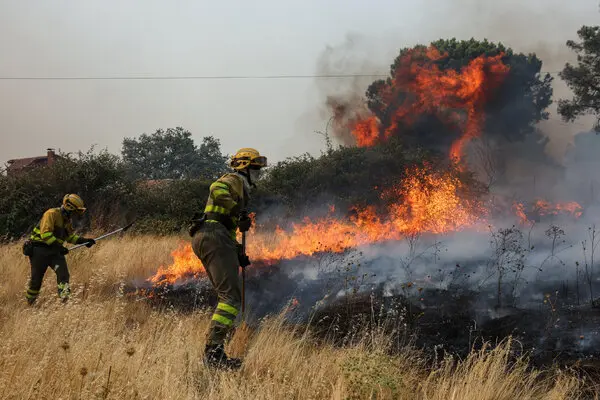
Wildfires across southwest France and central/eastern Spain have triggered mass evacuations and are still active. If you have an upcoming trip to either country, with so many stories and rumours out there, here is a summary of the situation on the ground from our team and what it means for your travel plans.
The situation right now
- Scale: More than 300,000 people have been displaced across France and Spain combined, with figures still rising as new evacuation orders are issued.
- France: The worst-hit area is the Gironde department in the southwest, near Bordeaux. The fire has burned over 100,000 acres. As of Monday 27 July, French officials reported the blaze had slowed overnight, offering the first sign of relief, though it remains active. President Macron called a crisis meeting and mobilised military resources to support firefighting efforts. Rare "fire clouds" — a phenomenon officials say hasn't been seen before in France — have made the fire more unpredictable, since they can generate lightning that sparks new blazes.
- Spain: Fires near Madrid (over 60,000 acres burned) and in Ávila (over 100,000 acres) were brought under control over the weekend after a difficult stretch on Saturday, though strong winds are complicating containment. A third major fire is active in eastern Spain (Castellón province). A national emergency has been declared.
- Weather outlook: Temperatures in Madrid are forecast to hit around 38°C (100°F) through the week, with fire risk rising to "very high" or "extreme" across much of Spain from Tuesday. No rain is forecast, so conditions may worsen before they improve.
Should you travel to France or Spain right now?
The UK government has not issued a blanket warning against travel to either country, but it is advising caution:
- In France, access to affected areas may be restricted and roads can close with little notice; further evacuations are possible.
- The UK government has a standing general warning about wildfire risk in France between April and October.
- Officials in the worst-affected French department (Gironde) have directly asked tourists to stay away for now and are advising people already there to consider going elsewhere.
- If you're in or travelling to an affected area, follow local authorities and emergency services closely. In a genuine emergency in France or Spain, dial 112.
Because there's no formal "do not travel" advisory, most travellers will not be able to claim on travel insurance simply for choosing not to go, and cancelling now risks forfeiting any right to a refund or rebooking. The general advice from consumer and insurance experts is to hold off on cancelling and reassess closer to your departure date, when the picture will be clearer and airlines/operators are more likely to offer flexibility.
Where exactly are the fires?
- France: Highest alert level in Gironde and Pyrénées-Orientales; second-highest in Aude and Var. Multiple fires are burning nationally, including on Corsica.
- Spain: National emergency declared for fires in the Madrid and Ávila regions; a separate fire is active in Castellón (eastern Spain). Other inland areas have also reported fires.
Insurance and refunds — the practical bit
- Travel insurance: Whether wildfire disruption is covered depends entirely on your policy. Only around half of travel insurance policies include "catastrophe" or "trip disruption" cover, so many travellers won't be covered even if their trip is disrupted. Check your policy wording or call your insurer directly.
- Flight cancellations: If your airline cancels your flight, you're entitled to a rebooking or a full refund.
- Package holidays: A cancelled package booking should be refunded in full — flights, accommodation, and transfers.
- Independent bookings: If you booked flights and accommodation separately, each provider needs to be dealt with individually. Your airline may refund you even if your hotel (unaffected by the fires) does not.
- If you cancel unprompted: Without an official advisory against travel, insurers generally treat this as a "disinclination to travel" and won't pay out. It's worth waiting rather than cancelling pre-emptively.
Getting real-time updates
Given how quickly this is changing, we are going to be providing regular updates on the situation via this page, our social media channels, and our newsletters, however, there are a number of official sources that you can visit to gain updates
- UK FCDO travel advice (France and Spain pages) — sign up for email alerts on the specific country pages at gov.uk/foreign-travel-advice; this is the most authoritative source for UK travellers and updates as the picture develops.
- https://www.gov.uk/foreign-travel-advice/france
- https://www.gov.uk/foreign-travel-advice/spain
- French wildfire risk map — the official government map (run by the French fire/interior authorities) shows live alert levels by department.
- https://forest-fire.emergency.copernicus.eu/
- Météo-France / AEMET — the French and Spanish national meteorological agencies publish live fire-risk and heat forecasts.
- https://meteofrance.com/
- Local prefecture social media accounts (e.g. the Gironde prefecture) — these post the most immediate evacuation and road-closure updates for their specific departments
- https://x.com/DGobiernoMadrid
- https://x.com/Avila_Gob?lang=en
- https://www.instagram.com/popular/prefecture-gironde/